
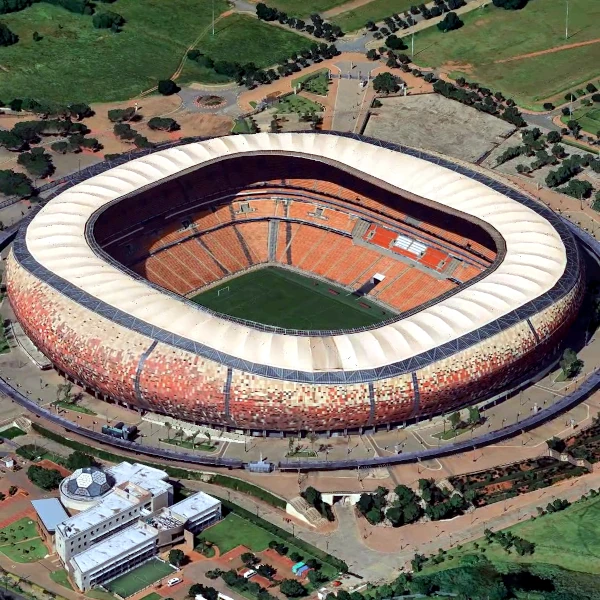
The FNB Stadium, also known as Soccer City, is the largest stadium in South Africa and one of the most iconic in Africa. Located in Johannesburg, it was inaugurated in 1989 and renovated for the 2010 FIFA World Cup, with a capacity of about 94,000 spectators. It has hosted historic events, such as the 2010 World Cup final. The design is inspired by an African calabash, a symbol of hospitality. Besides sporting events, it hosts concerts and cultural activities, and is a landmark for South African football. Its unique architecture and central location make it a symbol of national unity and pride. Image Rendering by Google Earth Studio.
Author: Stefano Marsili
-
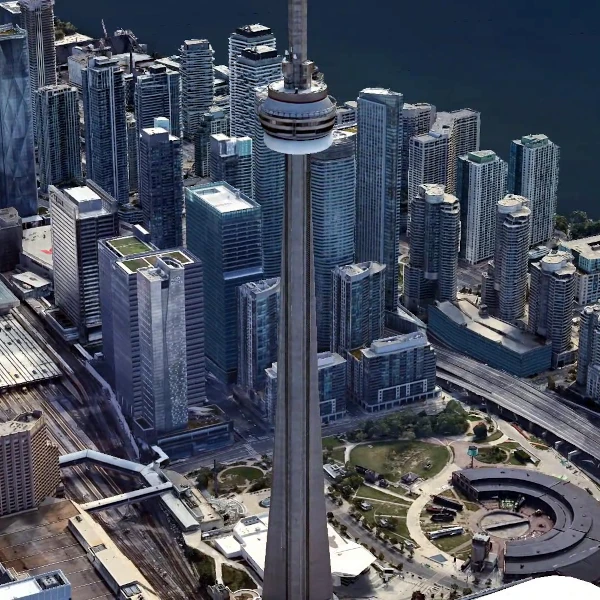
Cn Tower – Toronto – Canada
The CN Tower in Toronto, standing at 553 meters, is one of Canada’s most iconic structures and a symbol of the city. Inaugurated in 1976, it was the world’s tallest tower until 2009. Its sleek, tapered design and disc-shaped top make it easily recognizable. The tower offers a spectacular panoramic view of the city and Lake Ontario from its observation deck. Among its main attractions are the Glass Floor, which allows visitors to walk above the void, and the 360° revolving restaurant, offering a unique dining experience. The CN Tower is also an important telecommunications hub and a landmark for those exploring Toronto. Its innovative design and imposing structure continue to captivate visitors. Image Rendering by Google Earth Studio.
-
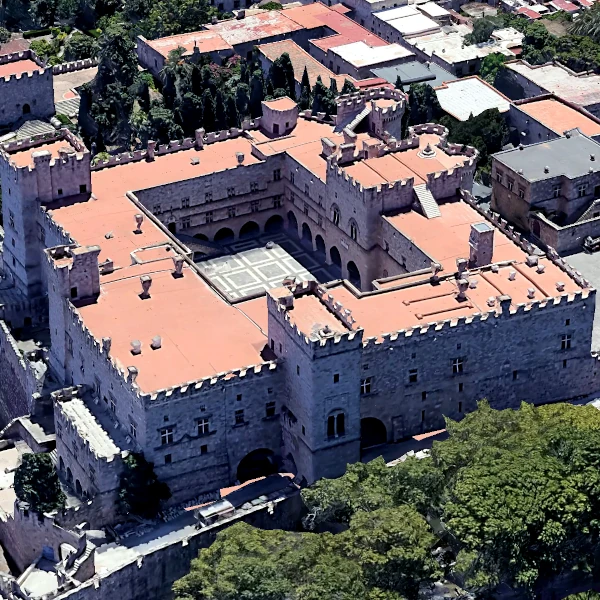
Governor Palace – Rhodes – Greece
The Governor’s Palace in Rhodes, built between 1925 and 1930, is an impressive example of neomedieval and neorenaissance architecture, designed by the Italian architect Vittorio Mesturino during the period of Italian rule over the island. Located near the Mandraki harbor, the palace served as the residence of the island’s governor. Its majestic façade and detailed decorations reflect the influence of the Italian Renaissance, with crenellated towers and grand interior halls. Today, the Governor’s Palace is one of the main symbols of Rhodes, representing the fusion of medieval history and the modern influences of Italian rule. Image Rendering by Google Earth Studio.
-
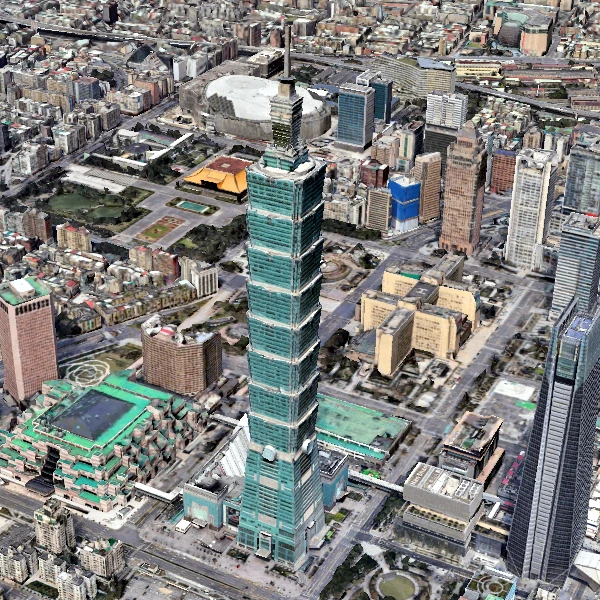
101 – Taipei – Taiwan
The Taipei 101 skyscraper, located in the capital of Taiwan, is one of the most iconic and majestic buildings in the world. Standing at 508 meters tall, it was the tallest building in the world from 2004 to 2010, until the completion of the Burj Khalifa in Dubai. The design of Taipei 101 is inspired by the shape of bamboo, a symbol of strength and prosperity in Chinese culture. The building consists of 101 floors above ground, housing a shopping mall, offices, and an observation deck offering breathtaking views of the city. Additionally, a massive spherical damper inside helps maintain the building’s stability against strong winds and earthquakes. Taipei 101 is a symbol of Taiwan’s modernity and innovation, attracting visitors and tourists from around the world. Image Rendering by Google Earth Studio.
-
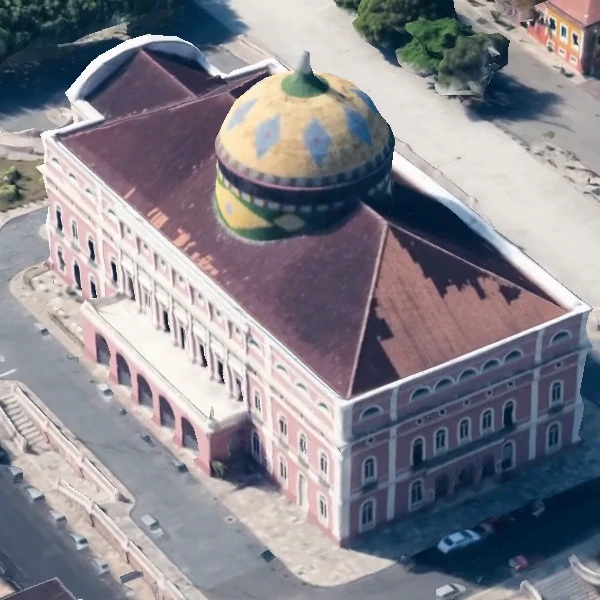
Amazon Theater – Manaus – Brazil
The Amazon Theater, located in the heart of Manaus, Brazil, is one of the most important and impressive architectural landmarks in the region. Inaugurated in 1896, it is a symbol of the city’s wealth and economic power during the rubber boom. The building is constructed in neoclassical style, featuring an imposing façade with Doric columns and an iconic dome decorated with green and yellow tiles from France. The theater hosts opera, ballet, and concert performances and is renowned for its extraordinary acoustics. The interior is adorned with Italian marble, fine woods, and elegant stuccoes. Today, the Amazon Theater is a cultural hub for the city and Brazil, attracting tourists and culture enthusiasts from around the world. Image Rendering by Google Earth Studio.
-
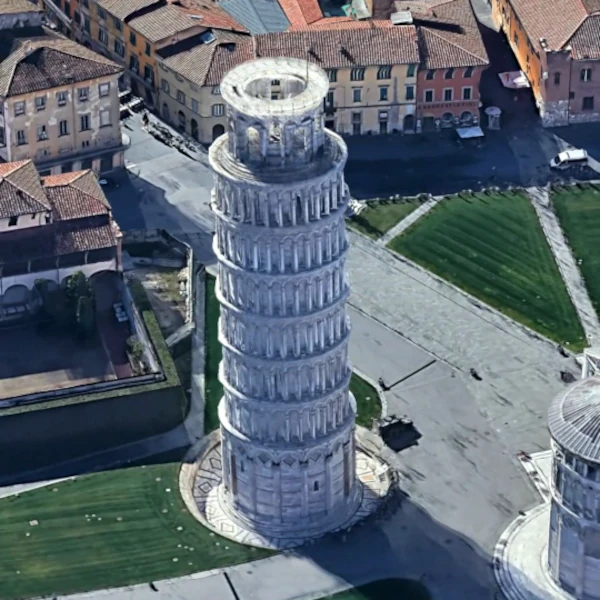
Tower – Pisa – Italy
The Leaning Tower of Pisa is one of Italy’s most famous monuments, located in Pisa, Tuscany. It is the freestanding bell tower of the Cathedral of Pisa, built between 1173 and 1372. Standing at 57 meters tall, it has eight stories, including the bell chamber at the top. Made of white marble, it features elegant arches. The tower is famous for its unintended tilt, caused by an unstable foundation. Despite this, it has become a symbol of resilience and engineering ingenuity. Over the centuries, efforts have been made to prevent its collapse and preserve its structure. It is part of the Piazza dei Miracoli complex, which also includes the Cathedral, Baptistery, and Camposanto. Image Rendering by Google Earth Studio.
-
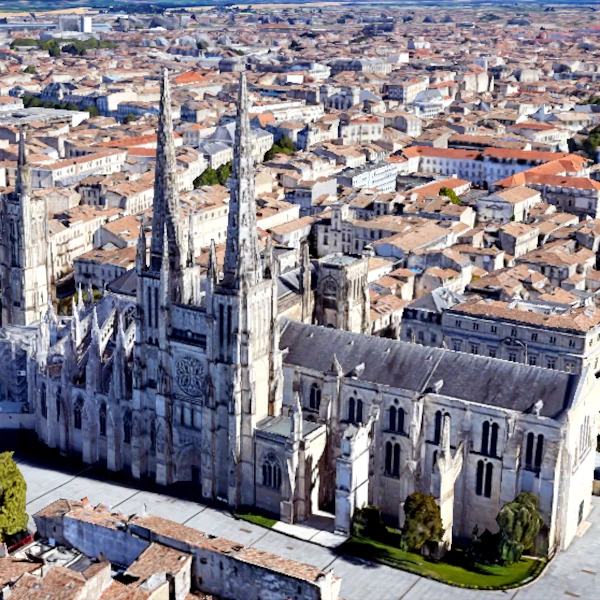
St. Andrew Cathedral – Bordeaux – France
The Cathedral of Saint Andrew in Bordeaux, a masterpiece of French Gothic architecture, is an impressive structure located in the heart of the city. Built between the 12th and 15th centuries, it is famous for its stunning stained glass windows and majestic facade. The bell tower, known as “La Grosse Cloche,” dominates the city skyline. A UNESCO World Heritage site, the cathedral represents an important symbol of Bordeaux’s religious and architectural history. Image Rendering by Google Earth Studio.
-

Capitol – Washington – Usa
The United States Capitol, located on Capitol Hill in Washington D.C., is the home of the United States Congress, which includes the Senate and the House of Representatives. Inaugurated in 1800, the Capitol is a symbol of American democracy. Its impressive dome, visible from afar, is one of its most recognizable features, while the neoclassical building is surrounded by beautiful gardens and monuments. Inside, there are historic chambers and works of art that celebrate the history of the United States. The Capitol is also a landmark for significant events such as presidential inaugurations and political demonstrations. Image Rendering by Google Earth Studio.
-
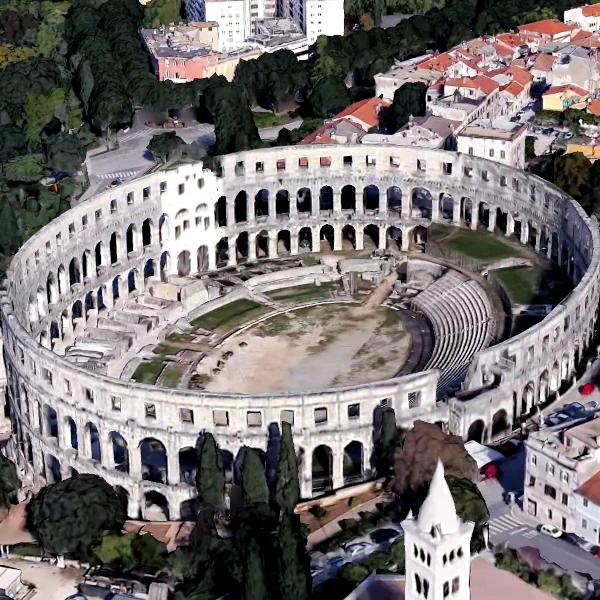
Arena – Pula – Croatia
The Pula Arena, located in Croatia, is one of the best-preserved examples of a Roman amphitheater. Built between 27 BC and 68 AD, it is the sixth-largest arena in the world and the most intact. With a capacity of around 20,000 spectators, it was used for gladiatorial combat and other public performances. Today, it is an important historical monument and hosts cultural events, including concerts and festivals. Its grandeur attracts visitors from all over the world. Image Rendering by Google Earth Studio.
-
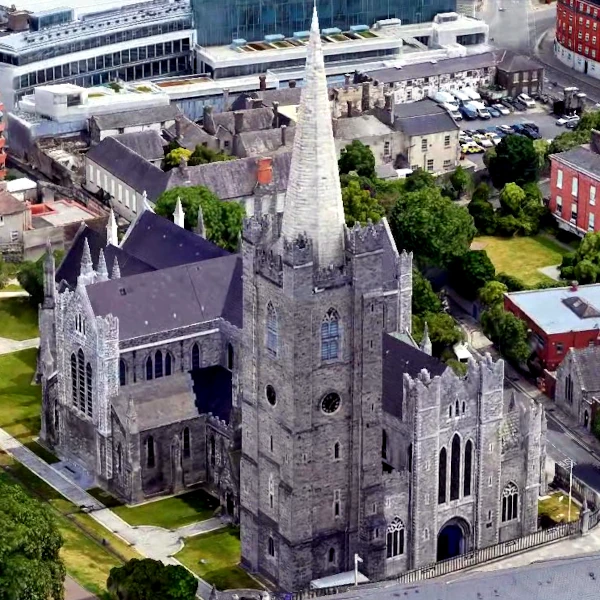
St. Patrick Cathedral – Dublin – Ireland
St. Patrick’s Cathedral in Dublin is one of the city’s most iconic landmarks. Built in 1191, it is the largest cathedral in Ireland and stands tall in the Gothic style. Dedicated to St. Patrick, the patron saint of Ireland, the cathedral has a rich and fascinating history. Inside, you’ll find stunning arches, stained glass windows, and the famous well where it’s said that St. Patrick baptized the first converts to Christianity. A symbol of Ireland’s religious and cultural heritage. Image Rendering by Google Earth Studio.